0410 099 463
The difference between good stonework and great stonework comes down to two things: the stone itself, and how it’s used. Not all stone is interchangeable, and not all masonry techniques suit every application. Some projects need the structural density of bluestone. Others need the warmth of sandstone. Some need the formality of cut stone, others the character of random masonry.
With EASYLOVEBLUESTONE I work with and the masonry styles I use — so you can understand what’s right for your property and why it matters.
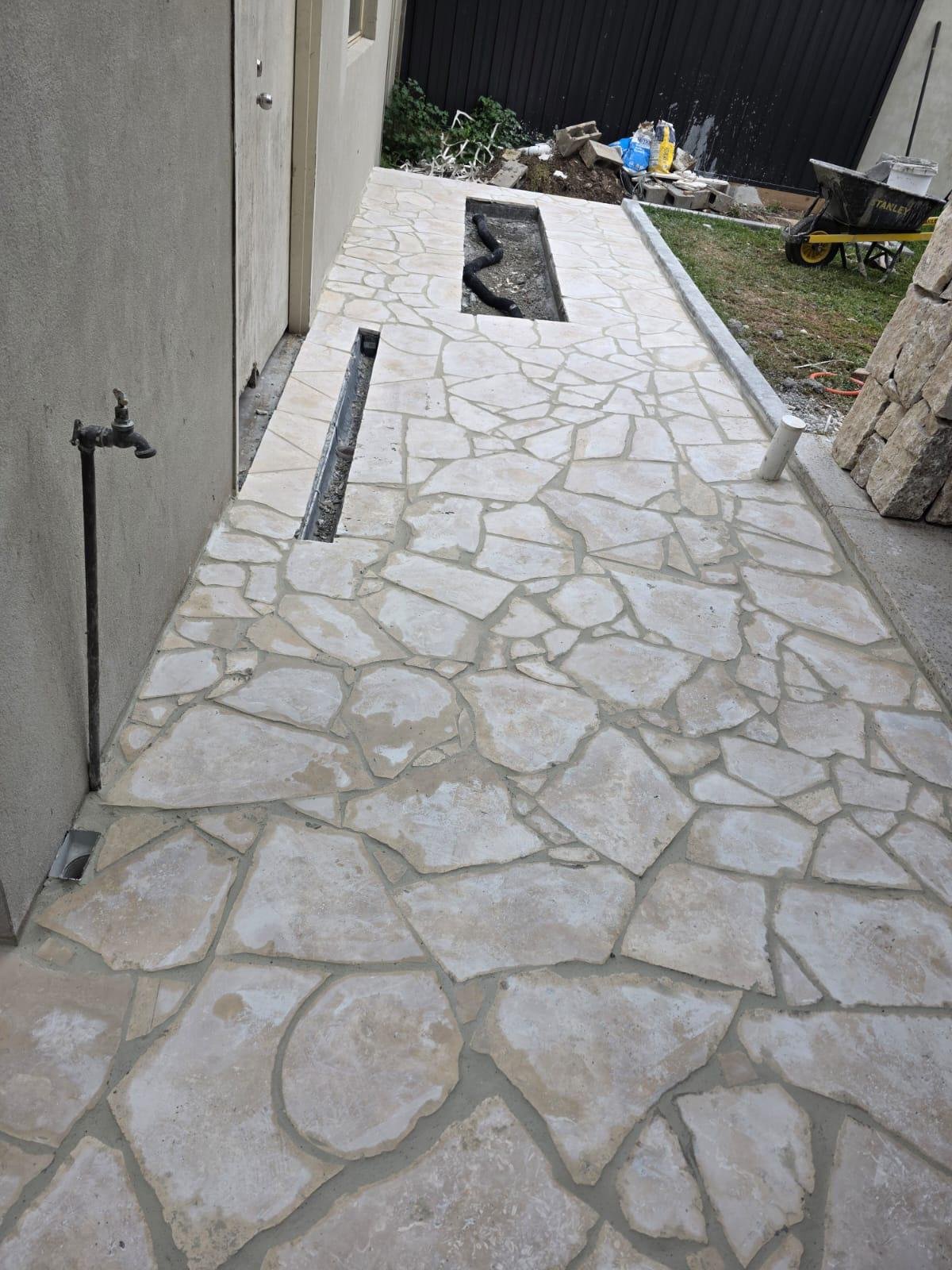
I work with three primary natural stone materials for Melbourne residential projects. Each has distinct characteristics — density, colour, texture, weathering properties — that make it better suited to certain applications. Here’s what you need to know about each one.
Victorian bluestone is a dense basalt stone with a distinctive dark blue-grey colour. It’s been quarried in Victoria for over 150 years and is used extensively throughout Melbourne’s built environment — in historic laneways, city footpaths, heritage buildings, and public infrastructure.
There’s a reason it’s lasted this long in high-traffic, high-exposure applications: it’s one of the most durable natural stones available in Australia.
Bluestone has a fine, consistent grain structure. When freshly cut, it appears as a uniform dark grey-blue. Over time, it develops a subtle weathered surface that deepens the colour slightly without losing its visual consistency. In random stone applications, the natural cleft (split) surface creates texture and depth.
If your project prioritises structural strength, durability, and minimal maintenance — bluestone is the right choice. It’s particularly well-suited to:
Bluestone is extremely hard-wearing, weather-resistant, and handles freeze-thaw cycles, heavy loads, and constant foot traffic without deteriorating. Unlike softer stones that can flake, chip, or wear unevenly, bluestone maintains its surface integrity over decades of use.
significantly more solid than sandstone or limestone
Doesn't absorb water easily, resists staining
Handles Melbourne's rain, wind, and temperature shifts
Ages gracefully with a subtle patina
with natural tonal variation
Walkways, courtyards, driveways, high-traffic areas
Structural support for sloped blocks and gardens
significantly more solid than sandstone or limestone
Where maximum strength is required
(non-slip when honed or textured)
Requiring hard-wearing, long-term durability
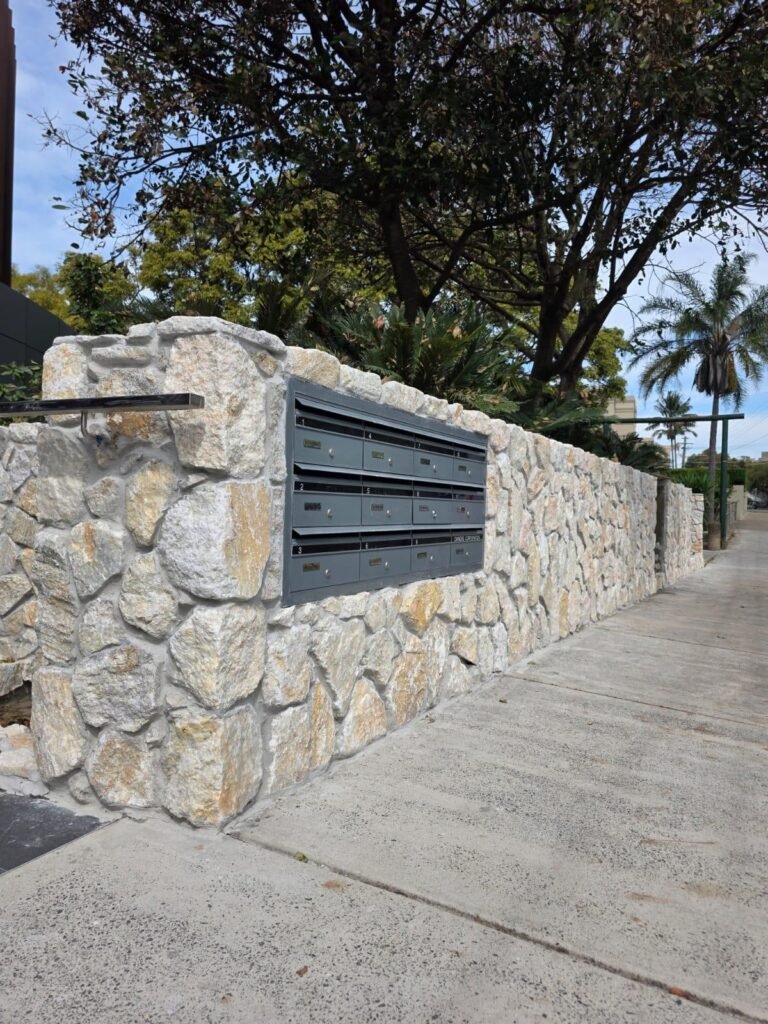
Sandstone is a sedimentary stone formed over millions of years from compressed sand and mineral deposits. In stonework, it’s prized for its warm colour range — cream, beige, honey, ochre, soft grey — and its naturally textured surface.
Unlike bluestone’s uniform density, sandstone has visible grain patterns and colour variation from piece to piece. This natural variation is what gives sandstone its character and makes it ideal for projects where warmth, texture, and organic appearance matter more than structural uniformity.
Sandstone has a layered, textured appearance. The surface can be split (natural cleft finish), sawn (smooth and even), or honed (lightly polished). In random stone masonry, the natural edges and tonal variation create depth and organic visual rhythm. In crazy paving, the mix of cream, beige, and grey tones creates a warm, flowing surface.
If your project prioritises warmth, texture, and a natural aesthetic — sandstone is the right choice. It’s particularly well-suited to:
Sandstone is softer than bluestone but still highly durable when properly selected, laid, and sealed. It’s been used in Australian architecture for over two centuries — in heritage buildings, garden walls, and traditional stonework across the country.
Cream, beige, honey, soft grey, rust tones
Textured surface — each stone has individual character
No two pieces are identical
Develops a weathered patina over time that enhances its appearance
Visible grain structure and natural bedding planes
Particularly where warmth is desired
The varied tones and textures create visual interest
adds warmth and texture to rendered or modern homes
Feature walls and landscape elements
Heritage or character properties where sandstone suits the period
Sandstone is porous and can stain if not sealed properly in certain applications (particularly kitchen or wet areas). For outdoor use in walls and paving, it weathers naturally and requires minimal maintenance beyond occasional cleaning.
Limestone-style stone refers to light-coloured natural stone in shades of pale cream, soft grey, off-white, and neutral beige. This category includes Australian and imported limestone, as well as similar sedimentary stones with comparable characteristics.
Limestone-style stone is prized for its clean, refined appearance and neutral colour palette. It works beautifully in both contemporary and traditional architecture, providing a sophisticated material presence without dominating the design.
Sandstone has a layered, textured appearance. The surface can be split (natural cleft finish), sawn (smooth and even), or honed (lightly polished). In random stone masonry, the natural edges and tonal variation create depth and organic visual rhythm. In crazy paving, the mix of cream, beige, and grey tones creates a warm, flowing surface.
If your project prioritises warmth, texture, and a natural aesthetic — sandstone is the right choice. It’s particularly well-suited to:
Unlike bluestone’s dark tones or sandstone’s warm ochres, limestone-style stone sits in the lighter end of the spectrum — making it ideal for projects where a clean, neutral palette is required or where the stone should complement rather than contrast with existing materials.
Light colour range — pale cream, soft grey, off-white, neutral beige
Consistent tonal range within each stone type (less variation than sandstone)
Smooth to lightly textured finish depending on the cut
Complements both modern and traditional architecture
Weathers gently, developing a soft patina over time
High-end boundary walls and feature walls — particularly on premium homes
Facade cladding for contemporary or architect-designed projects
Crazy paving in modern landscapes where a lighter palette suits the design
Interior stone features — hearths, feature walls, entries
Projects where a refined, neutral aesthetic is essential
Limestone can be more porous than bluestone and may require sealing in high-exposure or stain-prone applications. For exterior walls and paving, it weathers naturally with minimal maintenance.
Choosing the Right Stone and Style for Your Project
Is it a boundary wall, paving, facade cladding, or retaining wall? Some stones and styles are structurally better suited to certain applications.
Does your home have clean modern lines, traditional character, or heritage details? The stone should complement the architecture, not fight it.
Do you want warmth and texture, or clean refined lines? Natural organic character, or contemporary precision?
Random stone masonry and crazy paving are more labour-intensive than cut stone. Custom stonework takes longer than standard applications.
When I come out to see your property, I’ll explain what works best for your specific situation — and why. I’ll show you stone samples, discuss the options clearly, and advise on what’s realistic within your brief, your budget, and your site conditions.
The goal is always the same: the right stone, the right technique, built to last.